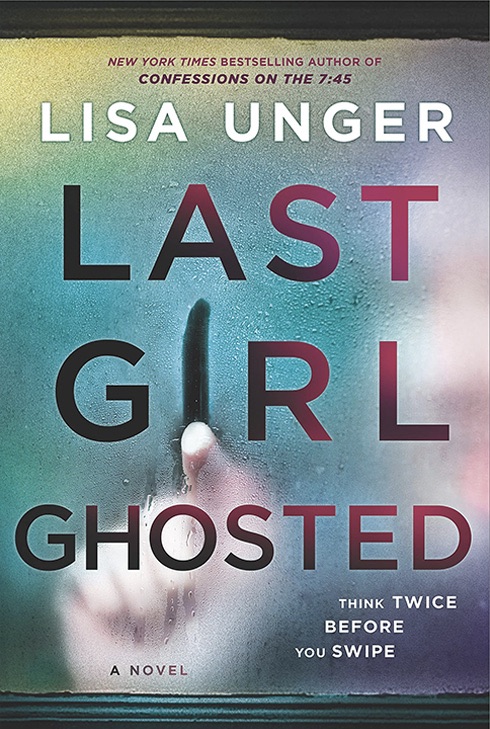
I must admit that I wasn’t quite sure what to expect when I started reading a sample of the book Last Girl Ghosted (LGG) by Lisa Unger. Not really being a customary consumer of thrillers, I barely had an inkling of what might have been waiting for me amongst those pages. Only landing upon the book itself by way of a book club that I had joined, I determined to at least keep an open mind and give it a chance, which I did. And once intriguingly drawn in by the sample, I launched right into the book, stoked by the fires of the prologue.
Please note that in an effort to avoid providing any spoilers, I will keep my discussion of the book fairly brief and make it a point to not include too many specific, revealing details. Hopefully, this allows you to get the just of what I am conveying without feeling as though I have given too much away.
LGG is the story of a columnist and podcaster by the name of Wren Greenwood who opens her mind and heart to a mysterious man, Adam, whom she meets on a dating app. A whirlwind romance ensues, which then comes to a screeching halt when the man disappears without a trace or any real semblance of a notice. Another mystery man surfaces, shedding light on the fact that Adam is possibly leading a different life than the one he presents to Wren, a life that is tangled up in something sinister involving missing women and sordid details, compelling her to embark on an investigation that is sure to change her life.
The story succeeds in a number of areas—providing an interesting plot, developing characters who are identifiable and able to be fully imagined, creating realistic moments of suspense, though often rather predictable, and demonstrating an inter-connectedness between the characters and their sub-plots.
The tone of the language used in the book also lends itself to the story’s success in that it serves as well to make the characters relatable while also drawing the reader into a world that is wrought with suspense and danger.
However, the book also proffers a number of aspects that don’t quite reach the level of complimenting its more successful offerings, including substantial employment of lengthy glimpses into the pasts of multiple characters presented in chapter form, interwoven with the tumultuous present of many of the same, which causes the story to leave the reader continually bouncing all over the place, back and forth throughout time, necessitating a repeated regrouping and repositioning of one’s focus. This technique, when executed in small doses, can be useful, but when used to this extent, it comes across as a bit exasperating.
Unger also utilizes a type, level, and amount of foul language that is not only unnecessary, but also is done in such a way that detracts from the dialogue and the story overall. Though some readers might not be phased by the use of such language—being more accustomed to it, indifferent to it, or the like—many readers may find the use of that type of language and the frequency of its use unsettling and, at times, offensive.
Additionally, Unger incorporates a somewhat awkward use of the second person when having the narrator speak about the mysterious character Adam, as though she is talking directly to him but without actually doing so, something that Unger does not do with any other character. Such use of the second person in this way is jarring to the reader, constantly requiring a pause to remind oneself of what the narrator is doing, taking away from the experience of full immersion in the story.
Furthermore, though the plot is engaging, the exploration of it is presented in such a way that leans toward the overuse of repetition of ideas and concepts to an extent that serves as a vivid example of beating a dead horse, rather than helpfully reminding the reader of pertinent information that has been previously presented. In doing so, the story continues on for about one hundred pages more than necessary, resulting in a book that is a whopping 402 pages long, not including the extra content.
Overall, LGG is an interesting read whose shortcomings are, for the most part, balanced out by its triumphs. Have any of you read this book? If so, I would love to hear your take on it. Be blessed. #sanguinemango

 Sanguine Mango